
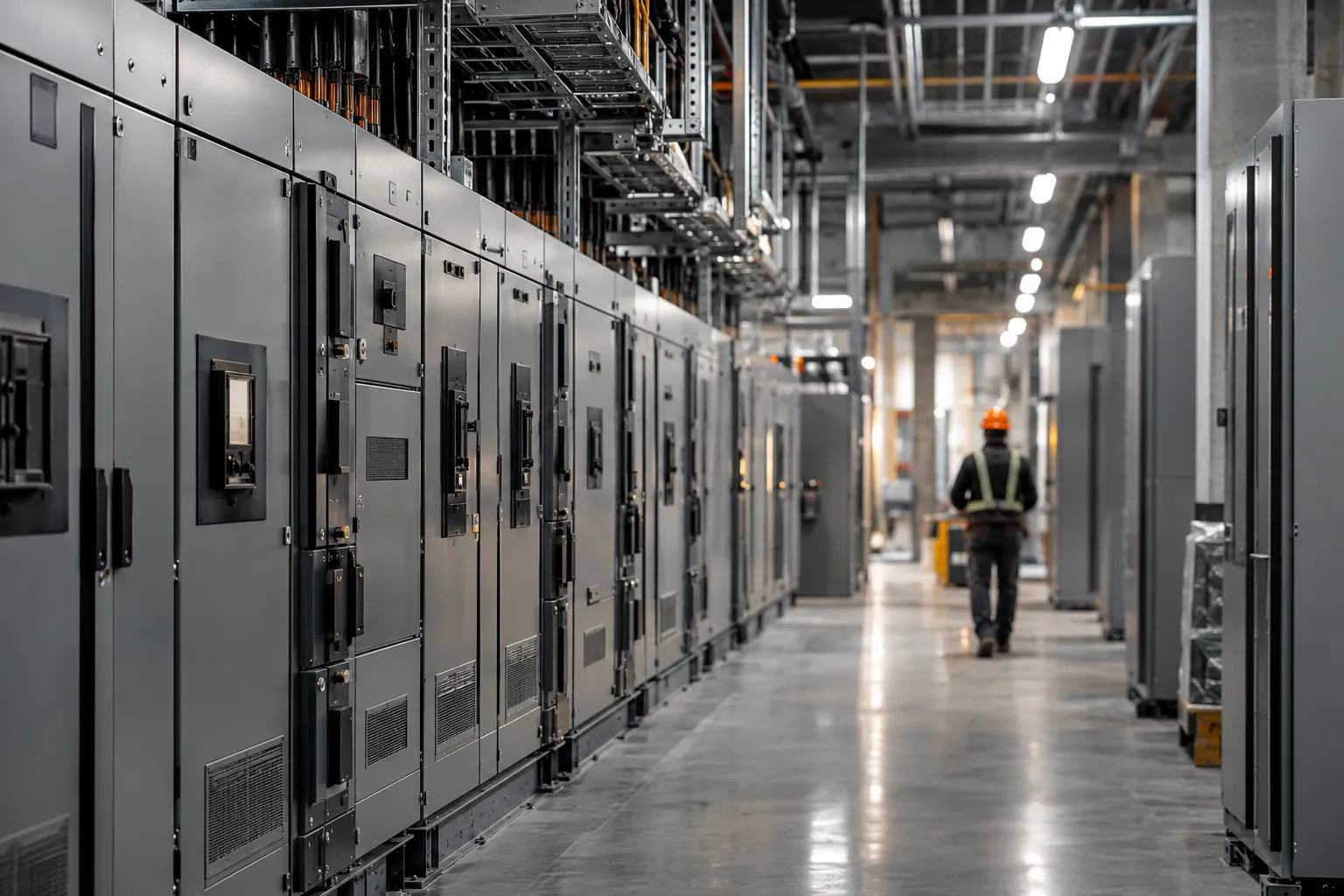
Data centers are one of the busiest markets in electrical contracting. Owners are racing to bring capacity online, and the contracts show it: compressed schedules, heavy damages and a long chain of forms from owner to GC to sub. A lot of this work goes to subs a GC already knows, which often means signing the GC's paper with little room to negotiate. That makes it more important to know where the risk sits, so you can price it even when you can't change it.
1. Liquidated damages at the owner's daily rate
Owners set liquidated damages to match what a late data hall costs them, and GCs pass those numbers down. A daily rate written for a hyperscale facility can exceed your margin on the job within days.
Ask for: LDs only for delay you cause, apportioned when several trades contribute, capped as a percentage of your subcontract, and the only remedy for delay.
2. Uncapped consequential damages
A late energization can mean lost revenue for the owner and its tenants. Without a waiver of consequential damages in your subcontract, that loss can be claimed against you, even if the GC has a waiver in its own contract with the owner.
Ask for: a mutual waiver of consequential damages at least as broad as the one in the prime contract. Liquidated vs. consequential damages.
3. Long-lead gear and price escalation
Switchgear, transformers, generators and UPS systems can take many months to arrive, and prices can move while you wait. On a fixed lump sum with no escalation clause, the increase is yours.
Ask for: an escalation clause for named equipment and commodities, time extensions for documented supplier delays, and payment for stored materials. Long-lead switchgear and escalation.
4. Acceleration and out-of-sequence work
When the schedule slips upstream, the GC may direct you to add crews, work overtime, or work out of sequence to hold the date. Without a clause that treats directed acceleration as a change, those costs turn into arguments at closeout.
Ask for: directed acceleration and resequencing handled as changes, with lost productivity recoverable, and written direction before you add shifts.
5. Owner-furnished equipment
On many data center jobs the owner buys major equipment and you install it. Late deliveries, shipping damage, missing parts and coordination with the manufacturer's startup technicians are risks you don't control.
Ask for: delays and defects in owner-furnished equipment treated as excusable and compensable, your responsibility for that equipment starting only when you receive and accept it, and the manufacturer's startup obligations kept with the owner.
6. Commissioning without a defined scope
Data centers go through several levels of commissioning, ending in integrated systems testing that often happens late and takes more than one round. Your crews may be needed on site long after your installation is done.
Ask for: a defined commissioning-support scope (which tests, how many rounds, what staffing), with extra rounds and retests caused by others paid as changes.
7. Warranties that start late or run long
A warranty that starts at final acceptance of the whole facility can begin months after your gear was energized and in use. Long warranties with no owner duty to operate and maintain the equipment properly shift wear and misuse onto you.
Ask for: warranty starting at substantial completion of your work or at energization, terms that match the manufacturers' warranties, and exclusions for owner operation, maintenance and modifications.
8. Design responsibility hidden in the scope
"Complete and operational" systems, delegated design of supports and bracing, and controls shown only as performance requirements can make you the designer without a design fee.
Ask for: scope defined by the drawings and your proposal, delegated design listed and priced separately, and confirmation of what insurance covers any design you take on. "Complete and operational".
9. Owner security and confidentiality rules
Hyperscale owners often impose background checks, badging, escorted access, photo bans and strict confidentiality, and federally funded projects can add domestic-content requirements. Each costs time and money, and most come in through flow-down clauses.
Ask for: the owner's site and security requirements before you bid, so you can price them, and confidentiality terms that still let you share documents with your insurer, lender and attorney.
10. Payment held up by paperwork
On fast jobs, pay applications bounce for formatting, missing lien releases or schedule-of-values disputes, and each round adds weeks.
Ask for: the exact pay application requirements in writing at the start, payment timing that runs from a complete pay application, and a clear process for disputed line items so the undisputed amount still gets paid. California's prompt payment laws.
Price what you can't change
You won't get every change on a data center job. But each of these risks has a cost, and the subs who do well put that cost in the number, or in a short list of exceptions attached to the subcontract, before they sign.
General information, not legal advice about your situation. Reading it doesn't create an attorney-client relationship. Attorney advertising. ReCo.Legal is not a law firm; legal services are provided by independent, licensed attorneys.